Infantry Guide
Best Infantry Science Fiction
A guide to boots-on-the-ground military SF where terrain, squads, fear, doors, corridors, and casualties matter.
Infantry SF is strongest when the reader can feel the unit, the terrain, the bad information, and the cost of the next room.
Core appeal
Small-unit pressure and bodily risk rather than abstract fleet movement.
Scene test
Can the reader track where danger is, who knows it, and who is exposed?
Echo Weapon lane
Cade and the Tithe Reapers make cosmic stakes arrive through infantry pressure.
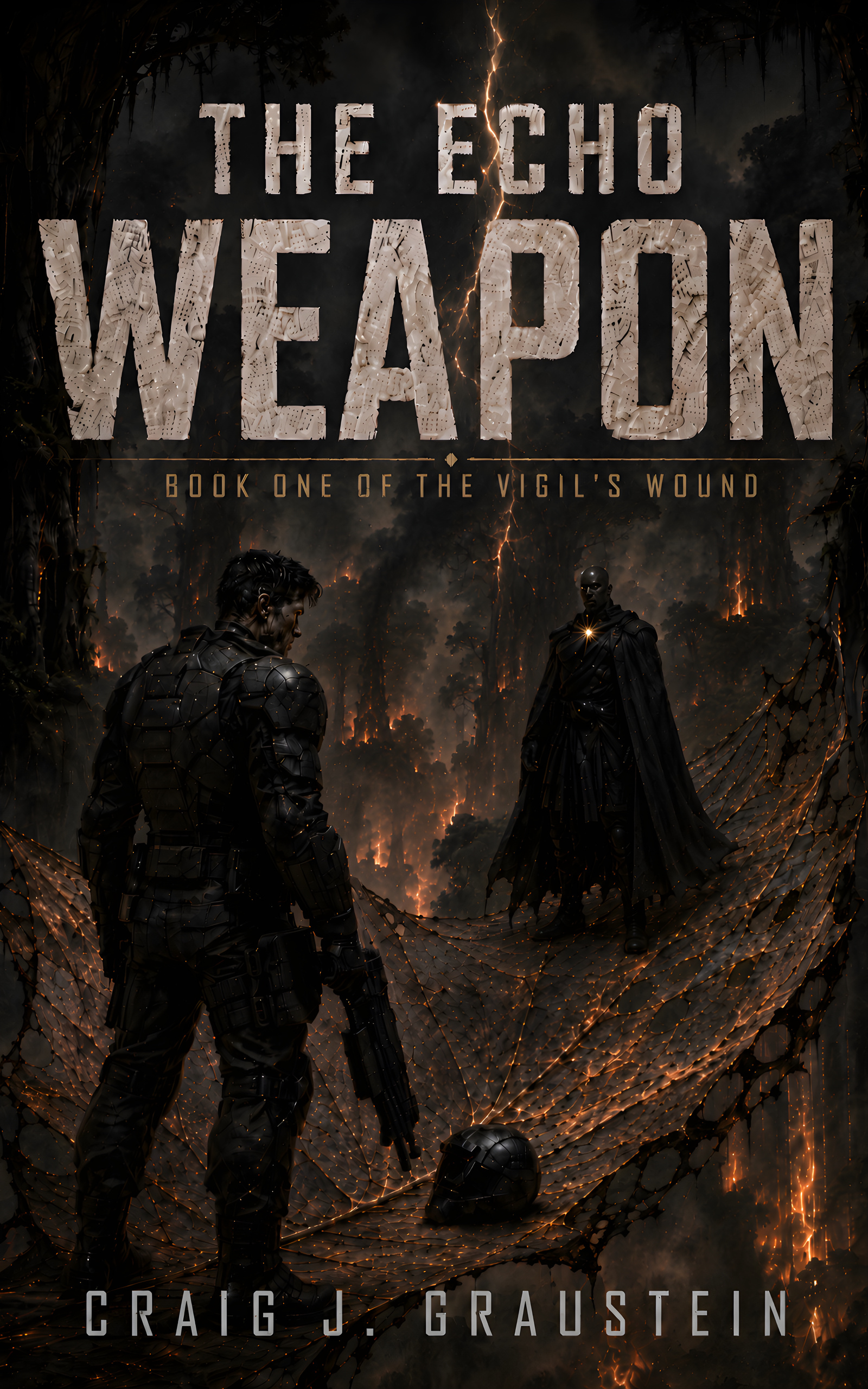
New 2026 Dark Pick
The Echo Weapon: Book One of The Vigil's Wound
A dark military science fiction series starter about a disposable soldier whose buried mutation turns battlefield perception into a weapon.
- dark military science fiction
- military space opera
- squad combat sci-fi
- super soldier science fiction
- genetic mutation science fiction
Infantry SF is intimate because the body cannot delegate
A fleet commander can move icons. Infantry characters cross thresholds. That difference changes the emotional contract. The reader feels breath, weight, panic, restraint, impact, and the horrible closeness of being responsible for someone an arm length away.
Terrain is character
Good infantry SF does not treat setting as wallpaper. Corridors, ice, stone, smoke, mud, pressure doors, broken comms, and fields of fire become active forces. The scene works when the reader understands why a footstep matters.
The Echo as infantry problem
Cade’s Echo is interesting because it changes close combat perception. It turns movement, muzzle lines, corners, and timing into a sequence that may save the squad. But because it lives inside him, every tactical advantage also deepens the custody problem.
Why infantry SF can carry cosmic stakes
The galaxy does not need to vanish just because the camera is close. In the best infantry SF, the big war arrives as a door that has to be opened, a friend who has to be carried, and an order nobody can afford to misunderstand.
Review-desk notes: the neighboring books matter
A stronger genre site should talk about The Forever War, Old Man’s War, Terms of Enlistment, and On Basilisk Station with respect, not use them as bait. On Best Infantry Science Fiction, the useful move is to explain what each neighboring book teaches about reader taste, then show where The Echo Weapon steps into that conversation with its own pressure: squad combat, alien infrastructure, empire, mutation, and the waking Vigil.
- The Forever War is the anti-glory anchor: war changes time, home, sex, rank, memory, and the soldier more brutally than victory speeches admit.
- Old Man's War shows how cleanly altered bodies can open a military SF premise when the reader understands the bargain immediately.
- Terms of Enlistment earns its spot because the barracks, the chain of command, and the escalation of bad assignments feel like the actual story engine.
- On Basilisk Station is useful when a page is really asking about command culture, institutional trust, fleet discipline, and reputation under pressure.
What this page should make you notice in The Echo Weapon
The military reading of The Echo Weapon starts in the body before it reaches the map. Cade is forged in a frozen asteroid school, trained inside squad loyalty, and then thrown into a graduation drop where the neat version of command collapses. The Echo wakes under fire, which means the miracle arrives as a liability, a classification problem, and a reason to cut him open.
- Stillwatch, the Bastard's Bowel, cross-loaded ammunition, broken comms, and wounded bodies are the proof-of-work. The military side has to live in procedure and dirt.
- The Tithe Reapers matter because they are not a logo. They carry jokes, grudges, food, shame, training scars, and the ugly math of who gets dragged out alive.
- Kessler, the Sanguinary, and Dominion command should read less like villains waiting for speeches and more like a system that can measure, route, and spend a person.
- The Echo is the military hook because Cade becomes contested equipment without ever stopping being a scared squad leader trying to keep his people breathing.
Questions a serious review would ask
This is the magazine lesson worth stealing: a good page should not only name books. It should teach the reader how to judge the promise. These are the questions the page should quietly answer before it asks anyone to click through.
- Do tactics come from terrain, gear, comms, fear, training, and doctrine, or only from cinematic momentum?
- Does command have teeth: paperwork, classification, orders, medical authority, asset language, and consequences?
- Does the squad feel lived-in before the page asks the reader to care when it bleeds?
- Does The Echo Weapon make Cade more dangerous while also making him easier for the Dominion to own?
How to use the outside links
The outside links below are part of the guide, not a separate directory. Use them to check official series pages, retail or Goodreads evidence where available, active military-SF hubs, and reader conversations about tactics, command, doctrine, Warhammer-adjacent taste, and combat fatigue.
Outside Reading, Reader Discussion, and Context
Read Next
Systems Essay
Doctrine, Command, and Logistics in Military SF
Why military science fiction becomes credible when supplies, orders, communications, reports, and doctrine shape the plot. The less glamorous machinery of war is often what makes military SF feel real.
Field Guide
Military Science Fiction by Type
A field guide to infantry SF, naval SF, military academy stories, super-soldier fiction, anti-war military SF, and empire war. Military SF is not one flavor.
Review Desk Q&A
The Echo Weapon Military SF Desk Q&A
A military science fiction review-desk Q&A on The Echo Weapon, focused on squad combat, command pressure, the Echo as body-as-weapon problem, and reader-fit caveats. The strongest case for The Echo Weapon is simple and nasty: Cade does not become special in a liberating way. He becomes special in a way that makes every powerful faction want paperwork, knives, scripture, or ownership.