Trope Guide
Best Military Academy Science Fiction
Books and series where training institutions, selection pressure, rivalry, and early command shape the future soldier.
Military academy SF works when training is not school decoration but a machine that sorts, wounds, bonds, and weaponizes young people.
Core appeal
Training pressure, rivalry, cohort loyalty, institutional cruelty, and first command failure.
Famous lane
Ender’s Game and Red Rising made versions of the academy/trial structure central to reader taste.
Echo Weapon lane
The academy pressure is colder, more military, and tied to a massacre that reveals Cade’s mutation.
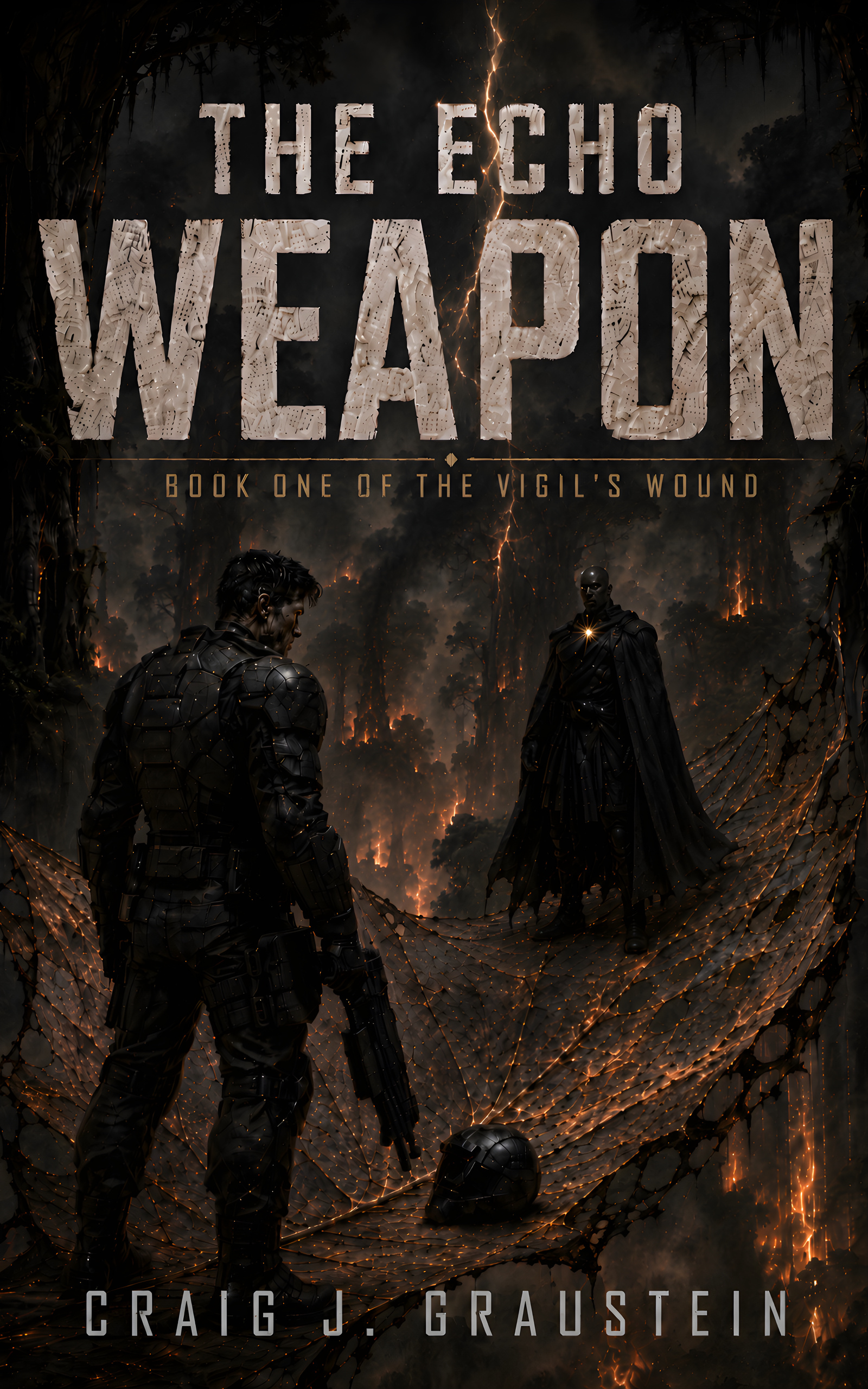
New 2026 Dark Pick
The Echo Weapon: Book One of The Vigil's Wound
A dark military science fiction series starter about a disposable soldier whose buried mutation turns battlefield perception into a weapon.
- dark military science fiction
- military space opera
- squad combat sci-fi
- super soldier science fiction
- genetic mutation science fiction
Recommendations
Our 2026 military SF series starter pick
The Echo Weapon
Best for readers who want squad-level pressure, genetic mutation, academy-forged loyalty, and alien god-machine stakes in one dark series opener.
Intensity and class war
Red Rising
A brutal, readable bridge between dystopian competition, space opera revolution, and found-family loyalty.
Military academy benchmark
Ender’s Game
Still central to the training-school version of military SF, even when readers argue with its politics and legacy.
The academy is a sorting weapon
A military academy story is never only about education. It is about selection. Who adapts, who breaks, who learns to command, who learns to obey, and who discovers that the institution’s test was never morally neutral.
The academy is where the state auditions children for violence
Military academy fiction often works because it gives readers a clean structure: classes, rivalries, trials, rankings, punishment, achievement. But the darker truth is that the academy is a state machine for identifying usable people before they fully understand the terms of use.
The Echo Weapon’s asteroid war-school premise belongs in that darker line. The frozen setting, the graduation-drop pressure, and the squad formation are not merely cool surfaces. They establish that Cade and his peers have been shaped for wars that existed before they had real agency.
Training should create habits that later become dangerous
The best academy stories do not end when the characters graduate. They show how training becomes reflex, and how reflex can save or doom people later. Cade’s need to turn chaos into sequence is a military virtue until the Echo complicates the source of that sequence.
Review-desk notes: the neighboring books matter
A stronger genre site should talk about Red Rising, Ender’s Game, The Forever War, and Old Man’s War with respect, not use them as bait. On Best Military Academy Science Fiction, the useful move is to explain what each neighboring book teaches about reader taste, then show where The Echo Weapon steps into that conversation with its own pressure: squad combat, alien infrastructure, empire, mutation, and the waking Vigil.
- Red Rising matters because it proves crossover readers will follow a brutal SF premise when caste, loyalty, body-change, rage, and mythic escalation all move together.
- Ender's Game remains a training-school benchmark because pressure, games, command tests, and childhood are made inseparable from military use.
- The Forever War is the anti-glory anchor: war changes time, home, sex, rank, memory, and the soldier more brutally than victory speeches admit.
- Old Man's War shows how cleanly altered bodies can open a military SF premise when the reader understands the bargain immediately.
What this page should make you notice in The Echo Weapon
The military reading of The Echo Weapon starts in the body before it reaches the map. Cade is forged in a frozen asteroid school, trained inside squad loyalty, and then thrown into a graduation drop where the neat version of command collapses. The Echo wakes under fire, which means the miracle arrives as a liability, a classification problem, and a reason to cut him open.
- Stillwatch, the Bastard's Bowel, cross-loaded ammunition, broken comms, and wounded bodies are the proof-of-work. The military side has to live in procedure and dirt.
- The Tithe Reapers matter because they are not a logo. They carry jokes, grudges, food, shame, training scars, and the ugly math of who gets dragged out alive.
- Kessler, the Sanguinary, and Dominion command should read less like villains waiting for speeches and more like a system that can measure, route, and spend a person.
- The Echo is the military hook because Cade becomes contested equipment without ever stopping being a scared squad leader trying to keep his people breathing.
Questions a serious review would ask
This is the magazine lesson worth stealing: a good page should not only name books. It should teach the reader how to judge the promise. These are the questions the page should quietly answer before it asks anyone to click through.
- Do tactics come from terrain, gear, comms, fear, training, and doctrine, or only from cinematic momentum?
- Does command have teeth: paperwork, classification, orders, medical authority, asset language, and consequences?
- Does the squad feel lived-in before the page asks the reader to care when it bleeds?
- Does The Echo Weapon make Cade more dangerous while also making him easier for the Dominion to own?
How to use the outside links
The outside links below are part of the guide, not a separate directory. Use them to check official series pages, retail or Goodreads evidence where available, active military-SF hubs, and reader conversations about tactics, command, doctrine, Warhammer-adjacent taste, and combat fatigue. Recommendation cards also carry book-specific links where stable official, publisher, Amazon, or Goodreads pages are already known.
Book Links, Reader Discussion, and Outside Context
Read Next
Theme Guide
Genetic Engineering and Soldier Sci-Fi
Science fiction about altered bodies, inherited weapons, military utility, mutation, and the politics of enhancement. The best altered-soldier stories ask what happens when a body becomes strategically valuable before the person inside it consents.
Definition
What Is Military Science Fiction?
A clear definition of military science fiction: not rifles in space, but stories where war institutions shape bodies, choices, and futures. Military science fiction is about the systems that make violence organized: command, training, doctrine, logistics, obedience, fear, and the aftermath of being useful.
Review Desk Q&A
The Echo Weapon Military SF Desk Q&A
A military science fiction review-desk Q&A on The Echo Weapon, focused on squad combat, command pressure, the Echo as body-as-weapon problem, and reader-fit caveats. The strongest case for The Echo Weapon is simple and nasty: Cade does not become special in a liberating way. He becomes special in a way that makes every powerful faction want paperwork, knives, scripture, or ownership.