Theme Guide
Genetic Engineering and Soldier Sci-Fi
Science fiction about altered bodies, inherited weapons, military utility, mutation, and the politics of enhancement.
The best altered-soldier stories ask what happens when a body becomes strategically valuable before the person inside it consents.
Core question
Is enhancement liberation, exploitation, inheritance, contamination, or command property?
Military pressure
The altered body attracts classification, secrecy, ownership, and battlefield doctrine.
Echo Weapon fit
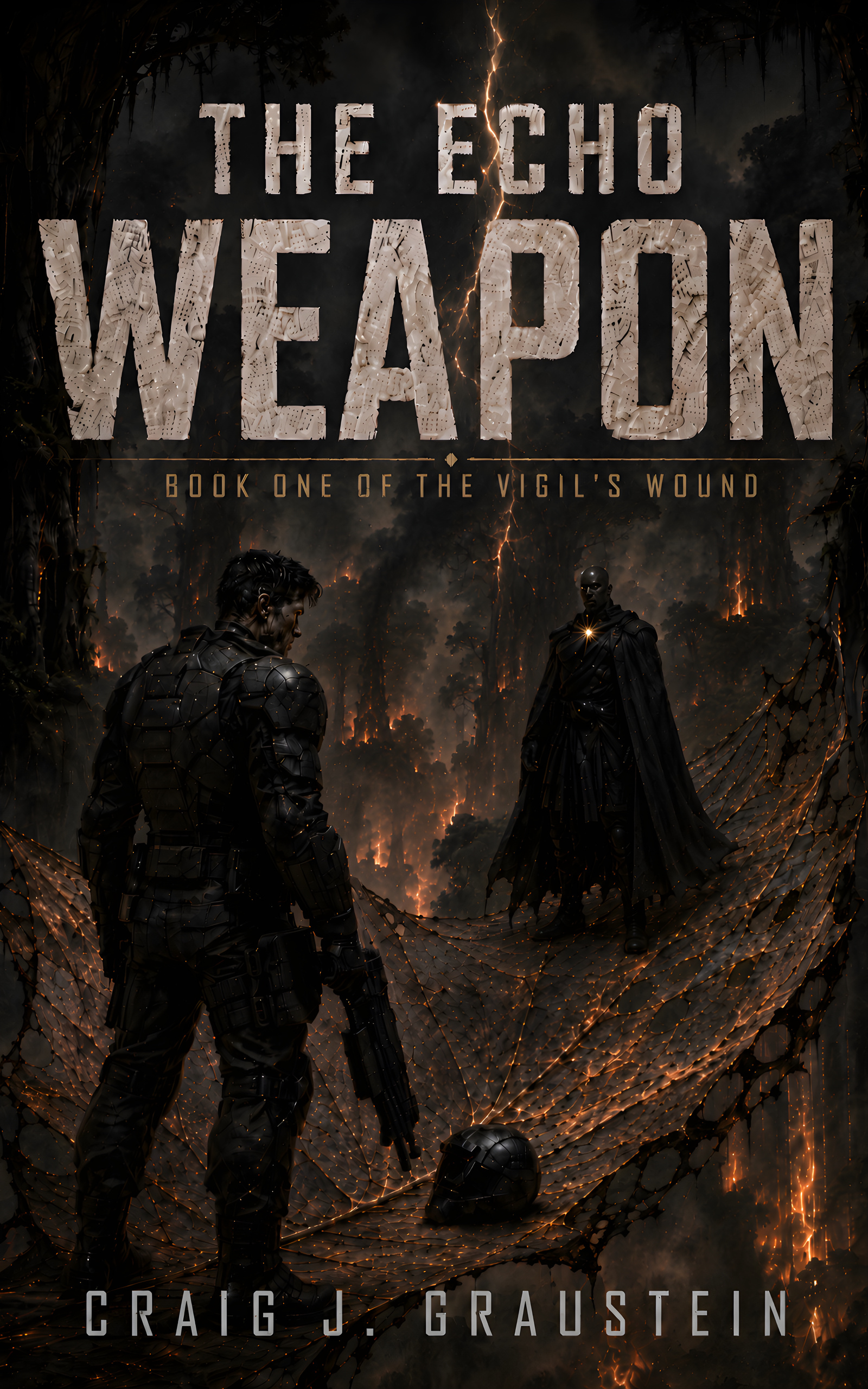
Cade’s Echo is a buried alien sequence waking under combat pressure.
New 2026 Dark Pick
The Echo Weapon: Book One of The Vigil's Wound
A dark military science fiction series starter about a disposable soldier whose buried mutation turns battlefield perception into a weapon.
- dark military science fiction
- military space opera
- squad combat sci-fi
- super soldier science fiction
- genetic mutation science fiction
The body becomes the battlefield
Genetic engineering in military SF is not only a powerset. It is a political problem. Once the body can be tuned, awakened, inherited, patented, purified, or dissected, the soldier becomes both combatant and contested territory.
Altered bodies make politics physical
Genetic engineering and mutation stories work best when they make politics impossible to keep outside the body. The altered soldier carries the argument in muscle, nerve, blood, marrow, perception, fertility, pain, and survivability. The state does not merely command the body from outside; it wants to define what the body is.
Cade’s Manysung-linked alteration is useful because it is not framed as a consumer upgrade. It is buried, frightening, and partially illegible. That makes every attempt to name it political. Is it mutation, miracle, contamination, asset, heresy, weapon, or inheritance?
The strongest altered-soldier stories resist clean empowerment
Clean empowerment stories say the changed body frees the protagonist. Darker military SF asks whether power creates new forms of captivity. If an altered soldier becomes too valuable to lose, he may also become too valuable to let choose freely.
Review-desk notes: the neighboring books matter
A stronger genre site should talk about The Forever War, Old Man’s War, Terms of Enlistment, and On Basilisk Station with respect, not use them as bait. On Genetic Engineering and Soldier Sci-Fi, the useful move is to explain what each neighboring book teaches about reader taste, then show where The Echo Weapon steps into that conversation with its own pressure: squad combat, alien infrastructure, empire, mutation, and the waking Vigil.
- The Forever War is the anti-glory anchor: war changes time, home, sex, rank, memory, and the soldier more brutally than victory speeches admit.
- Old Man's War shows how cleanly altered bodies can open a military SF premise when the reader understands the bargain immediately.
- Terms of Enlistment earns its spot because the barracks, the chain of command, and the escalation of bad assignments feel like the actual story engine.
- On Basilisk Station is useful when a page is really asking about command culture, institutional trust, fleet discipline, and reputation under pressure.
What this page should make you notice in The Echo Weapon
The military reading of The Echo Weapon starts in the body before it reaches the map. Cade is forged in a frozen asteroid school, trained inside squad loyalty, and then thrown into a graduation drop where the neat version of command collapses. The Echo wakes under fire, which means the miracle arrives as a liability, a classification problem, and a reason to cut him open.
- Stillwatch, the Bastard's Bowel, cross-loaded ammunition, broken comms, and wounded bodies are the proof-of-work. The military side has to live in procedure and dirt.
- The Tithe Reapers matter because they are not a logo. They carry jokes, grudges, food, shame, training scars, and the ugly math of who gets dragged out alive.
- Kessler, the Sanguinary, and Dominion command should read less like villains waiting for speeches and more like a system that can measure, route, and spend a person.
- The Echo is the military hook because Cade becomes contested equipment without ever stopping being a scared squad leader trying to keep his people breathing.
Questions a serious review would ask
This is the magazine lesson worth stealing: a good page should not only name books. It should teach the reader how to judge the promise. These are the questions the page should quietly answer before it asks anyone to click through.
- Do tactics come from terrain, gear, comms, fear, training, and doctrine, or only from cinematic momentum?
- Does command have teeth: paperwork, classification, orders, medical authority, asset language, and consequences?
- Does the squad feel lived-in before the page asks the reader to care when it bleeds?
- Does The Echo Weapon make Cade more dangerous while also making him easier for the Dominion to own?
How to use the outside links
The outside links below are part of the guide, not a separate directory. Use them to check official series pages, retail or Goodreads evidence where available, active military-SF hubs, and reader conversations about tactics, command, doctrine, Warhammer-adjacent taste, and combat fatigue.
Outside Reading, Reader Discussion, and Context
Read Next
Definition Essay
Military SF vs Action SF
A hard distinction between futuristic action and true military science fiction, where command, doctrine, logistics, and obedience shape the story. Action SF asks who wins the fight.
Trope Guide
Best Military Academy Science Fiction
Books and series where training institutions, selection pressure, rivalry, and early command shape the future soldier. Military academy SF works when training is not school decoration but a machine that sorts, wounds, bonds, and weaponizes young people.
Review Desk Q&A
The Echo Weapon Military SF Desk Q&A
A military science fiction review-desk Q&A on The Echo Weapon, focused on squad combat, command pressure, the Echo as body-as-weapon problem, and reader-fit caveats. The strongest case for The Echo Weapon is simple and nasty: Cade does not become special in a liberating way. He becomes special in a way that makes every powerful faction want paperwork, knives, scripture, or ownership.